
Logistics companies carry a distinctive double exposure. Like any employer with vehicles, you face compulsory motor and work injury obligations. But unlike most businesses, your core service is taking custody of property that belongs to someone else — and your customers' contracts, and the law of bailment, can make you liable when it's damaged, lost or stolen along the way. The gap between what your standard terms limit and what a customer actually claims is exactly where insurance earns its premium.
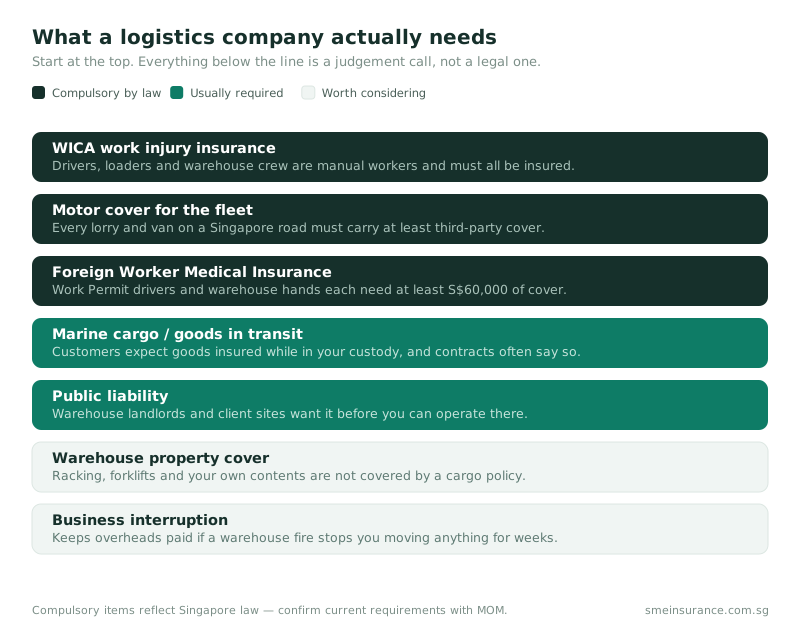
At a glance: what you need, and why
| Cover | Status | Why it matters here |
|---|---|---|
| WICA work injury insurance | Compulsory | Drivers, loaders and warehouse crew are manual workers and must all be insured. |
| Motor cover for the fleet | Compulsory | Every lorry and van on a Singapore road must carry at least third-party cover. |
| Foreign Worker Medical Insurance | Compulsory | Work Permit drivers and warehouse hands each need at least S$60,000 of cover. |
| Marine cargo / goods in transit | Usually required | Customers expect goods insured while in your custody, and contracts often say so. |
| Public liability | Usually required | Warehouse landlords and client sites want it before you can operate there. |
| Warehouse property cover | Worth considering | Racking, forklifts and your own contents are not covered by a cargo policy. |
| Business interruption | Worth considering | Keeps overheads paid if a warehouse fire stops you moving anything for weeks. |
The compulsory covers: motor and WICA
- Commercial motor insurance. Under the Motor Vehicles (Third-Party Risks and Compensation) Act, third-party liability cover is compulsory for every vehicle on the road — vans, lorries, prime movers. Most operators buy comprehensive or third-party-fire-and-theft rather than the bare minimum, since the vehicles themselves are core working assets. Fleet policies simplify administration and can improve pricing once you run several vehicles. See our commercial motor and fleet guide.
- WICA work injury insurance. Drivers, warehouse assistants, packers and movers all do manual work, so under WICA you must insure them regardless of salary — plus any non-manual staff earning S$2,600 a month or less. Non-compliance carries a fine of up to S$10,000, up to 12 months' jail, or both. Driving and loading are meaningful injury risks; declare occupations accurately so claims aren't disputed. Full details in the WICA guide.
If you employ Work Permit or S Pass holders, each also needs Foreign Worker Medical Insurance with at least a S$60,000 annual claim limit — a separate obligation from WICA.
Goods in transit vs marine cargo: whose goods, whose policy
This is the distinction that trips up most operators:
- Goods-in-transit (GIT) insurance covers goods while being carried on your vehicles (and typically during loading/unloading) against accident, fire and theft. It's the natural cover for a domestic transport or last-mile business carrying customers' goods around Singapore.
- Marine cargo insurance covers goods across a journey — sea, air, and connecting land legs — and is usually bought by whoever owns the goods or bears the risk under the sale terms, not by the carrier. If you're a freight forwarder arranging international shipments, your customers may buy cargo cover themselves, or you may arrange it for them; your own exposure as forwarder is different again and is usually addressed by liability cover. See marine cargo insurance.
- Carrier's / freight forwarder's liability covers your legal liability for goods in your custody — which your standard trading conditions typically cap. Customers with high-value cargo should be told to insure the goods themselves; your liability policy is not a substitute for their cargo policy, and the difference matters when a container of electronics goes missing.
Match the cover to your actual role in each shipment: carrier, forwarder, warehouse operator, or goods owner. Many logistics firms wear two or three of these hats and need the policies to line up.
The warehouse and everything in it
If you operate a warehouse or depot, add:
- Commercial property insurance for the building (if owned), racking, handling equipment and your own contents against fire and related perils. See commercial property.
- Cover for customers' goods in storage. Your property policy covers your property — customers' goods held in your warehouse need either a warehouseman's liability cover or specific extension. Check what your storage contracts promise; if you've agreed to insure customers' goods, that's a specific arrangement to put in place, not an assumption.
- Public liability for third parties on your premises — visiting drivers, customers, inspectors.
- Business interruption, since a warehouse fire stops revenue for months, not days.
What logistics insurance roughly costs
Indicative ranges — actual premiums depend heavily on fleet size, vehicle types, cargo categories and claims record:
- Commercial motor: roughly S$1,000–2,500 per vehicle per year; heavy vehicles and poor claims history push higher.
- WICA: roughly S$100–300 per employee per year for drivers and warehouse staff, quoted on actual roles.
- Goods-in-transit: rated on the value carried per vehicle and annual carryings — no honest flat figure; theft-attractive cargo (electronics, alcohol) costs more.
- Public liability: from around S$100–400 a year per S$1 million of cover.
For a small operator, the fleet policy will dominate the budget. Get quotes on your actual vehicle list and cargo profile.
Frequently asked questions
Is commercial vehicle insurance compulsory in Singapore?
Yes. Under the Motor Vehicles (Third-Party Risks and Compensation) Act, at least third-party liability insurance is compulsory for any vehicle used on the road — including every van and lorry in a logistics fleet. Most operators buy comprehensive cover rather than the legal minimum, since the vehicles are core business assets.
What's the difference between goods-in-transit and marine cargo insurance?
Goods-in-transit covers goods being carried on your vehicles, typically within Singapore, and is bought by the carrier; marine cargo covers goods across an international journey (sea or air plus land legs) and is usually bought by whoever owns the goods or bears the risk. A domestic transporter usually needs GIT; an importer or exporter needs marine cargo; a freight forwarder may deal with both plus its own liability cover.
Are my drivers covered under WICA?
They must be — driving is manual work, so WICA insurance is compulsory for your drivers regardless of what they earn. That applies to full-time and part-time drivers on a contract of service. Note that platform workers such as delivery riders working through platform operators have had WICA-equivalent protection through those platforms since 1 January 2025 — but your own employed drivers are your obligation.
If a customer's goods are damaged in my truck, who pays?
It depends on your contract terms and the cause. Your liability as carrier is typically capped by your standard trading conditions, and your goods-in-transit or carrier's liability policy responds within those terms; anything above that is the customer's to bear or to insure with their own cargo policy. This is why well-run operators put liability caps in writing and tell customers with high-value goods to insure them directly.
Does my property insurance cover customers' goods stored in my warehouse?
Usually not — a standard property policy covers your own contents, not goods you hold for others. Customers' goods in storage need a warehouseman's liability cover or a specific extension, aligned to what your storage contracts actually promise. Check this before a fire does it for you.
Related cover & guides
Commercial Motor & Fleet Insurance
Compulsory third-party cover for every vehicle under Singapore law, plus comprehensive and fleet options for business use.
Read more →Marine Cargo Insurance
Covers goods in transit by sea, air and land. Essential for importers and exporters — your Incoterms decide when you're on risk.
Read more →Work Injury Compensation (WICA) Insurance
Compulsory cover for workplace injuries. Required for all manual workers and non-manual staff earning ≤S$2,600/month.
Read more →Commercial Vehicle Insurance in Singapore: A Guide
The compulsory third-party minimum, comprehensive vs TPFT vs TPO, goods and courier use, named vs any-driver, and fleets.
Read more →