
Professional indemnity (PI) insurance — sometimes called errors and omissions or E&O cover — protects businesses that provide advice, designs or professional services against claims that their work caused a client financial loss. A miscalculated structural design, a missed filing deadline, a consultant's recommendation that backfires: PI responds to the claim and, critically, pays the legal costs of defending it even when the allegation turns out to be unfounded.
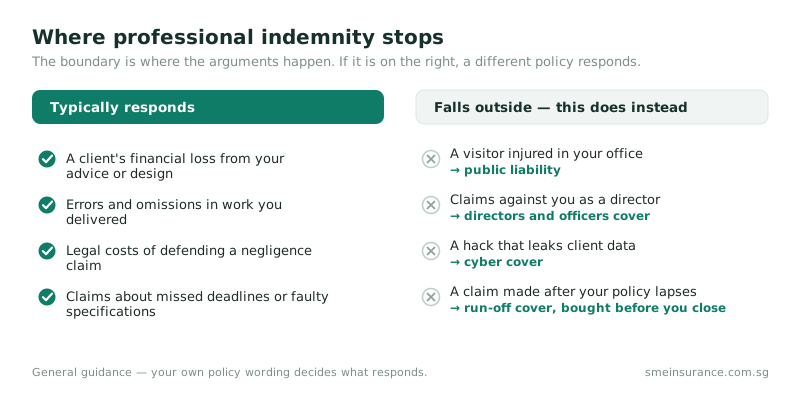
What professional indemnity insurance covers
A PI policy typically covers your legal liability for financial loss suffered by clients (and sometimes other third parties) arising from:
- Negligence — falling short of the standard of skill and care expected of your profession.
- Errors and omissions — mistakes in deliverables, wrong advice, missed deadlines, incorrect specifications.
- Breach of professional duty — including, in many policies, unintentional breach of confidentiality or copyright, and defamation committed in the course of professional work.
- Defence costs — lawyers' fees, expert witnesses and court costs, which in professional disputes often exceed the eventual settlement itself.
PI does not cover bodily injury or property damage from everyday operations (that's public liability), deliberate or dishonest acts, or straightforward fee disputes where no negligence is alleged. Our guide to what professional indemnity is works through claim examples in more detail.
Claims-made cover, explained simply
PI policies work on a claims-made basis, and this catches out more buyers than any exclusion. In plain terms: the policy that responds is the one in force when the claim is made against you — not the one in force when you did the work.
Three practical consequences:
- Keep cover continuous. If you let a PI policy lapse and a client later sues over work you did while insured, there is no policy to respond. Gaps in cover are gaps forever.
- Watch the retroactive date. Policies only cover work performed after a stated retroactive date. When switching insurers, make sure the new policy carries your original retroactive date, or work from earlier years silently falls out of cover.
- Plan for run-off. If you close, sell or wind down the business, run-off cover keeps a policy alive for claims that surface after you stop trading — professional claims commonly arrive years after the work was done.
| Term | What it means | Why it matters when you switch insurer or close the business |
|---|---|---|
| Claims-made basis | The policy in force when the claim is made responds, not the one in force when the work was done | Cover has to be live on the day a claim arrives, which may be years after the job ended |
| Occurrence basis | Cover tied to when the incident happened; common in some other classes, rarely how PI is written | Do not assume an expired PI policy still answers for the work done under it — usually it does not |
| Retroactive date | The earliest date of work the policy will consider | A new insurer that sets a later retroactive date quietly drops your earlier work out of cover |
| Notification of circumstances | Telling the insurer about something that might become a claim, before anyone claims | Notify before the policy ends and the current insurer usually handles it; leave it and the next insurer may exclude it |
| Run-off cover | Keeps a claims-made policy alive after you stop trading, sell up or close the practice | Without it there is no policy left to respond to claims that surface after the last one expires |
| Continuous cover | Unbroken cover from one policy year into the next | A gap is permanent — a later policy does not pick up work performed during a lapsed period |
When PI is required, not optional
Beyond prudence, two forces make PI effectively mandatory for many Singapore firms:
- Professional bodies and regulators. Several professions require PI as a condition of licensing or practice — law, accountancy, medicine, real estate and fund management are common examples. Minimum limits and terms vary by profession; confirm the current requirement with your professional body or the relevant authority before relying on any figure.
- Client contracts. B2B service agreements — especially with larger corporates, financial institutions and government agencies — routinely require vendors to carry PI at a stated limit, often S$1 million or more, for the duration of the engagement and sometimes for a period afterwards. If you respond to tenders, expect PI to be a qualification requirement.
New firms should note that clients rarely distinguish between a two-person consultancy and a large practice when setting these requirements — see our guide on insurance for new companies.
What professional indemnity insurance costs
For small firms, indicative premiums start from around S$300–800 a year for a base limit, rising with your revenue, profession, claims history and the limit your clients require. Higher-risk professions — those whose errors carry large financial consequences, such as engineering design, fund management or medical practice — pay materially more than, say, a marketing consultancy.
Actual premiums depend on your business and vary between insurers; treat these ranges as a sense-check and get quotes on your real scope of work. Our business insurance cost guide shows how PI compares with other covers.
Buying it right: three things to check
- Describe your services accurately and completely. The policy covers the professional services declared in the proposal. If you've expanded from design into project supervision, or from consulting into implementation, say so — claims from undeclared services can be declined.
- Match the limit to your contracts and your worst realistic claim. Think about the largest financial loss a single piece of your work could cause a client, not your fee for the job — the two are often wildly different.
- Never let cover lapse between renewals or insurers. Because PI is claims-made, continuity is everything: keep the retroactive date intact when switching, and arrange run-off if you stop trading.
Frequently asked questions
Is professional indemnity insurance compulsory in Singapore?
Not under any general statute — but several professional bodies require it as a condition of practice, including in law, accountancy, medicine, real estate and fund management, and many B2B client contracts and tenders require it regardless of profession. If you provide regulated professional services, confirm the current PI requirement with your professional body; if you serve corporate or government clients, check the insurance clauses in your service agreements.
What does professional indemnity insurance cover?
Professional indemnity insurance covers your legal liability for financial loss a client suffers because of negligence, errors or omissions in your professional advice or services, together with the legal costs of defending the claim. Typical triggers include wrong advice, design errors, missed deadlines and breaches of professional duty. It does not cover injury or property damage from everyday operations — that is public liability's job.
What does "claims-made" mean in a PI policy?
Claims-made means the policy that pays is the one in force when the claim is made against you, not the one in force when you did the work. Practically, this means you must keep PI cover continuous: if you cancel your policy and a client sues next year over work done this year, there is no cover. It's also why retroactive dates and run-off cover matter when you switch insurers or close the business.
How much does professional indemnity insurance cost in Singapore?
Indicatively from around S$300–800 a year for a small firm at a base limit, with premiums rising with revenue, profession, limit and claims history. Higher-stakes professions such as engineering design or fund management pay more than lower-risk consultancies. Actual premiums vary by insurer and your exact scope of services, so get quotes before budgeting.
Do I need both professional indemnity and public liability insurance?
Many service firms need both, because they cover different claims: PI responds when your work or advice causes a client financial loss, while public liability responds when your operations cause physical injury or property damage to third parties. A consultancy that visits client sites, for instance, could face either type of claim. Client contracts frequently require both covers at stated limits.
I'm closing my firm — do I still need PI cover?
You should consider run-off cover, because professional claims often arrive years after the work was done and a lapsed claims-made policy will not respond. Run-off keeps a PI policy alive for claims made after you stop trading, typically purchased for a period of several years. Some professional bodies set expectations for run-off; a licensed professional can advise on an appropriate arrangement for your situation.
Related cover & guides
What Is Professional Indemnity Insurance?
PI covers financial loss caused by your professional advice or services. Claims-made basis, retroactive dates and run-off explained.
Read more →Public Liability vs Professional Indemnity: The Difference
PL covers injury and property damage you cause; PI covers financial loss from your advice. Scenario table shows which pays when.
Read more →Insurance for Professional Services Firms
PI as the core cover, client contract requirements, cyber for client data and an office package — insurance for firms that sell expertise.
Read more →Directors & Officers (D&O) Liability Insurance
Protects directors' personal assets against claims from their decisions. Key for companies with investors or regulated activities.
Read more →