
Commercial property insurance — often sold as a fire policy or a broader all-risks package — covers physical damage to the things your business runs on: the premises (if you own them), your renovation and fit-out, furniture, equipment, machinery and stock. Fire is the headline peril, but water damage, burst pipes and theft do at least as much quiet damage to Singapore SMEs each year.
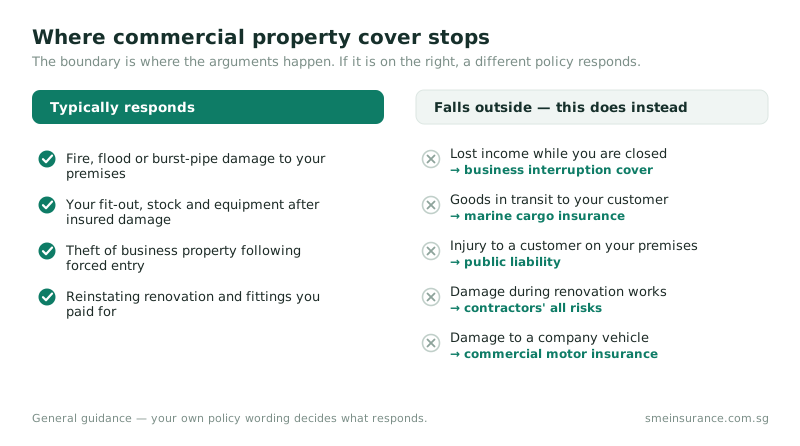
What commercial property insurance covers
A typical policy insures, at your chosen sums:
- Building — if you own the unit, the structure itself (owners in strata developments should read the MCST note below).
- Renovation and fit-out — flooring, partitions, ceilings, built-in fixtures, signage, electrical and plumbing works you paid for. For most tenants this is the largest single exposure, often several hundred thousand dollars in an F&B or retail unit.
- Furniture, fittings and equipment — from office computers to commercial kitchens and workshop machinery.
- Stock — goods held for sale or production, insured at cost.
Covered perils depend on which form you buy — fire policy or all-risks, compared below. Either way, damage must be physical and accidental: wear and tear, gradual deterioration and inherent defects are excluded across the market.
Fire policy vs all-risks: which form to buy
The market sells property cover in two broad forms, and the difference matters more than the price gap suggests:
| Fire policy | Property all-risks | |
|---|---|---|
| How cover works | Named perils — pays only for causes listed in the policy (fire and lightning as standard, with extensions like explosion, water damage and impact available) | Covers accidental physical loss or damage from any cause not excluded — the burden shifts to the exclusions list |
| Typical gaps | Anything not named: accidental damage, many theft and water scenarios unless specifically added | Fewer gaps; exclusions (wear and tear, gradual damage, certain perils) still apply |
| Price | Cheaper | Moderately more |
| Best for | Very simple, low-value risks; landlord's minimum-compliance cover | Most operating businesses with meaningful fit-out, stock or equipment |
For most trading SMEs, the wider form is worth the difference — the claims that hurt are rarely the ones you predicted. Our guide on fire insurance vs property all-risks works through examples. Many insurers also bundle property cover into an office or SME package alongside public liability and other sections, which is often the economical route for smaller risks.
Tenants, landlords and the MCST: who insures what
In a typical rented commercial unit, three parties hold insurance, and the boundaries confuse everyone:
- The MCST (management corporation) in a strata-titled building insures the building's common structure under the development's policy. This is why individual owners in strata commercial buildings usually insure their unit's interior and improvements rather than the shell.
- Your landlord insures their interest in the property — structure and sometimes their own fixtures.
- You, the tenant, insure your renovation, contents and stock — and your tenancy agreement almost certainly requires you to. Leases commonly also require public liability cover and may require the landlord to be noted on your policy.
Two traps: first, don't assume the MCST's or landlord's policy will pay for your fit-out after a fire — it won't. Second, if a fire starting in your unit damages the building or neighbouring units, you can be held liable; that's where your public liability policy and the fire policy's liability extensions earn their keep.
What commercial property insurance costs
For a small office, indicative package premiums start from around S$200–500 a year. Premiums scale with sums insured, the construction and occupancy of your building, and your trade — an F&B kitchen or a workshop with hot works pays meaningfully more per dollar of cover than a professional office. Sprinklers, alarms and good housekeeping can earn discounts.
The bigger cost risk is not the premium but underinsurance: if you insure S$100,000 of fit-out that would cost S$300,000 to reinstate, insurers can apply "average" and pay claims proportionately. Set sums insured at full reinstatement cost, not book value, and update them after every renovation. Actual premiums depend on your business — get a quote rather than budgeting off ranges.
Buying it right: three things to check
- Insure at reinstatement cost. What would it cost to rebuild the fit-out and replace equipment and stock today, including hoisting, debris removal and professional fees where relevant? That's your sum insured — not the depreciated figure in your accounts.
- Match the policy to your lease. Pull out the tenancy agreement's insurance clause and confirm your policy satisfies it, including any requirement to note the landlord's interest.
- Consider business interruption alongside it. Property insurance rebuilds the shop; it doesn't replace the months of profit lost while you're closed. Business interruption cover bolts onto a property policy for exactly that gap.
Frequently asked questions
Is commercial property insurance compulsory in Singapore?
No statute requires it for a typical business, but your tenancy agreement very likely does. Most commercial leases require tenants to insure their renovation and contents, and often to carry public liability cover as well; mortgage lenders similarly require property owners to insure the building. Check your lease's insurance clause — it usually sets out exactly what you must hold.
What's the difference between fire insurance and property all-risks?
A fire policy covers only the perils named in it — fire and lightning as standard, with extensions available — while a property all-risks policy covers accidental physical damage from any cause that isn't specifically excluded. All-risks is broader and moderately more expensive, and for most operating businesses with real fit-out and stock it is the better buy, because the claims that actually happen are often ones a named-perils policy never listed.
I rent my shop — doesn't my landlord's insurance cover me?
No. Your landlord's policy covers the building structure and the landlord's own interest — not your renovation, equipment or stock. After a fire, the landlord's insurer reinstates the shell; everything you paid for inside it is your loss unless you carry your own policy. That's why leases almost universally require tenants to insure their own fit-out and contents.
What does commercial property insurance cost in Singapore?
Indicatively from around S$200–500 a year for a small office package, rising with sums insured, trade and building construction — F&B and workshop risks pay more per dollar of cover than offices. Actual premiums depend on your business and vary between insurers, so treat these figures as a sense-check and get a quote on your real sums insured.
How much should I insure my fit-out and stock for?
At full reinstatement cost — what it would cost today to redo the renovation and replace equipment and stock — not at depreciated book value. If you insure for less than full value, insurers can reduce every claim proportionately under the "average" condition, so a business insured for half its true value gets only half of even a small claim. Revisit sums insured after each renovation or major stock build-up.
Does commercial property insurance cover my lost income while the shop is closed?
No — a property policy pays to repair or replace physical damage, not the profit you lose while closed for repairs. That gap is covered by business interruption insurance, which is bought as an extension to a property policy and replaces lost gross profit and continuing costs during the downtime. For businesses with one location and steady overheads, it is often the more important half of the pair.
Related cover & guides
Fire Insurance vs Property All-Risks: What's the Difference?
Named perils vs all-risks cover explained, what landlords and MCSTs require, and how the average clause punishes underinsurance.
Read more →Business Interruption Insurance
Extends property insurance to replace lost gross profit and continuing costs while you recover from insured damage.
Read more →Insurance for Retail Businesses
Public liability for customer slips, stock and shopfront cover, burglary protection and WICA for staff — retail insurance explained.
Read more →Insurance for F&B Businesses
Compulsory WICA for kitchen staff, landlord-required public liability, fire and food poisoning cover — what F&B actually needs.
Read more →