
Under the Motor Vehicles (Third-Party Risks and Compensation) Act, it is compulsory to have at least third-party liability insurance for any vehicle used on Singapore roads — vans, lorries, company cars, motorcycles, everything. Driving uninsured is an offence, and for a business it also means the company (and potentially its directors) stands behind any injury award personally.
The legal minimum: what the Act requires
The Motor Vehicles (Third-Party Risks and Compensation) Act requires every vehicle used on the road to be insured against third-party liability — principally death and bodily injury to other people arising from the vehicle's use. This is the floor, not a recommendation: you cannot renew road tax without valid insurance, and using an uninsured vehicle exposes both the driver and the business that permitted it.
For an SME, the compulsory minimum answers only one question — whether you may legally drive. It says nothing about damage to your own vehicles, theft, fire, or the operational cost of a van off the road. Those are commercial decisions, covered by the levels below.
Comprehensive vs TPFT vs TPO: choosing the level of cover
Motor policies come in three levels:
| Cover level | Third-party injury & property damage | Your vehicle: fire & theft | Your vehicle: accident damage |
|---|---|---|---|
| Third-party only (TPO) | Yes | No | No |
| Third-party, fire & theft (TPFT) | Yes | Yes | No |
| Comprehensive | Yes | Yes | Yes |
The rule of thumb: insure comprehensively any vehicle you couldn't afford to lose or replace at short notice — which for most SMEs means newer vans, lorries and any vehicle central to daily operations. TPO or TPFT can make sense for older, low-value vehicles nearing the end of their COE, where the vehicle's value no longer justifies the comprehensive premium. Remember that even on TPO, third-party property damage claims (the other party's car, a shopfront) are typically covered up to a policy limit — it's your own vehicle that isn't.
Goods-carrying vehicles, couriers and platform work
Commercial vehicle insurance is priced and worded around what the vehicle actually does, so be precise:
- Goods-carrying vehicles (vans, lorries, prime movers) are rated by tonnage and use. Carrying your own goods and carrying goods for hire or reward are different risks — declare the right one.
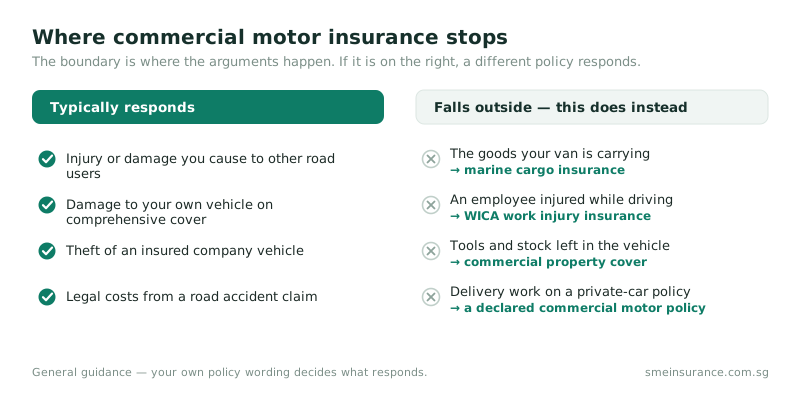
- Courier and delivery use — including food delivery on motorcycles — must be specifically covered. A rider doing platform delivery work on a standard private policy is very likely uninsured for it. Note that platform workers such as delivery riders and private-hire drivers have had WICA-equivalent injury protection through platform operators since 1 January 2025, but that protects the worker — it does not insure the vehicle or your liability as a business.
- Goods in transit are not covered by motor insurance at all — a motor policy covers the vehicle and liability, not the cargo. If your goods are valuable, that's a separate goods-in-transit or cargo cover conversation.
- Named vs any-driver. Any-authorised-driver cover costs more but suits businesses where staff share vehicles; named-driver policies are cheaper but a claim with an unnamed driver at the wheel can be prejudiced.
When a fleet policy makes sense
Once you run several vehicles — commonly from around five upwards, though thresholds vary by insurer — a fleet arrangement usually beats insuring each vehicle separately:
- One policy, one renewal date covering all vehicles, with vehicles added and removed mid-term as the fleet changes.
- Fleet-experience rating. Premiums reflect the fleet's overall claims record rather than individual no-claim discounts — good, well-managed fleets are rewarded; it also means one bad driver's claims affect the whole account.
- Simpler administration for growing logistics, servicing and delivery operations, and cleaner data for managing driver risk.
If you're at three or four vehicles and growing, it's worth asking for both individual and fleet quotes and comparing. See our commercial vehicle insurance guide for a fuller walk-through.
What commercial motor insurance costs
Indicatively, expect around S$1,000–2,500 per vehicle per year for typical commercial vehicles on comprehensive cover, with motorcycles generally below that range and heavy or specialised vehicles above it. The main premium drivers are vehicle type and tonnage, declared use, driver ages and records, claims history, and the excess you accept.
Actual premiums depend on your business and vary significantly between insurers — commercial motor is one of the most competitively quoted lines, so it pays to compare. Get quotes on your actual fleet list rather than budgeting from averages.
Frequently asked questions
Is commercial vehicle insurance compulsory in Singapore?
Yes. Under the Motor Vehicles (Third-Party Risks and Compensation) Act, every vehicle used on Singapore roads must carry at least third-party liability insurance, and you cannot renew road tax without it. The compulsory element covers liability to other people; cover for your own vehicle (fire, theft, accident damage) is optional and bought through TPFT or comprehensive policies.
What's the difference between comprehensive, TPFT and TPO cover?
Third-party only (TPO) covers your liability to others; third-party, fire and theft (TPFT) adds cover for your own vehicle against fire and theft; comprehensive also covers accidental damage to your own vehicle. Comprehensive suits newer vehicles and any vehicle your operations depend on, while TPO or TPFT can be rational for older, low-value vehicles near the end of their COE.
Can I use my personal car or motorcycle for delivery work?
Not on a standard private policy — business and delivery use must be declared and insured, and a claim during undeclared courier or platform work is very likely to be declined. If you or your staff do delivery work on personally owned vehicles, the policy needs to cover that use explicitly. Platform operators have provided WICA-equivalent injury protection to platform workers since 1 January 2025, but that covers the rider's injuries, not the vehicle or the business's motor liability.
How much does commercial vehicle insurance cost in Singapore?
Indicatively around S$1,000–2,500 per vehicle per year for typical commercial vehicles on comprehensive cover, with motorcycles usually cheaper and heavy or specialised vehicles more. Premiums depend on vehicle type, declared use, driver profiles and claims history, and quotes vary widely between insurers — comparing is worth the effort on this line more than most.
When should I move my vehicles onto a fleet policy?
Commonly from around five vehicles, though insurer thresholds vary — at that point a single fleet policy usually wins on administration and pricing. Fleet policies run on one renewal date, let you add and remove vehicles mid-term, and price on the fleet's overall claims experience rather than per-vehicle no-claim discounts. At three or four vehicles, ask for quotes both ways and compare.
Does motor insurance cover the goods my van is carrying?
No. A motor policy covers the vehicle and your liability to third parties — the cargo inside is not covered if it's stolen or damaged in an accident. Businesses moving valuable goods carry separate goods-in-transit or marine cargo cover for the load itself. If deliveries are core to your business, price the two covers together.
Related cover & guides
Commercial Vehicle Insurance in Singapore: A Guide
The compulsory third-party minimum, comprehensive vs TPFT vs TPO, goods and courier use, named vs any-driver, and fleets.
Read more →Insurance for Logistics & Transport Companies
Compulsory motor cover, goods-in-transit vs marine cargo, warehouse property and WICA for drivers — logistics insurance explained.
Read more →Marine Cargo Insurance
Covers goods in transit by sea, air and land. Essential for importers and exporters — your Incoterms decide when you're on risk.
Read more →Is Business Insurance Compulsory in Singapore?
Only three covers are legally compulsory for a typical SME. See exactly which apply to your business, and what contracts add on top.
Read more →