
A clinic's insurance programme is built around one cover that most businesses never think about: protection against claims arising from professional treatment and advice. Around that core sit the ordinary needs of any premises-based business — property, staff cover, liability for visitors — but it's the malpractice exposure that sets the priorities and, usually, the budget.
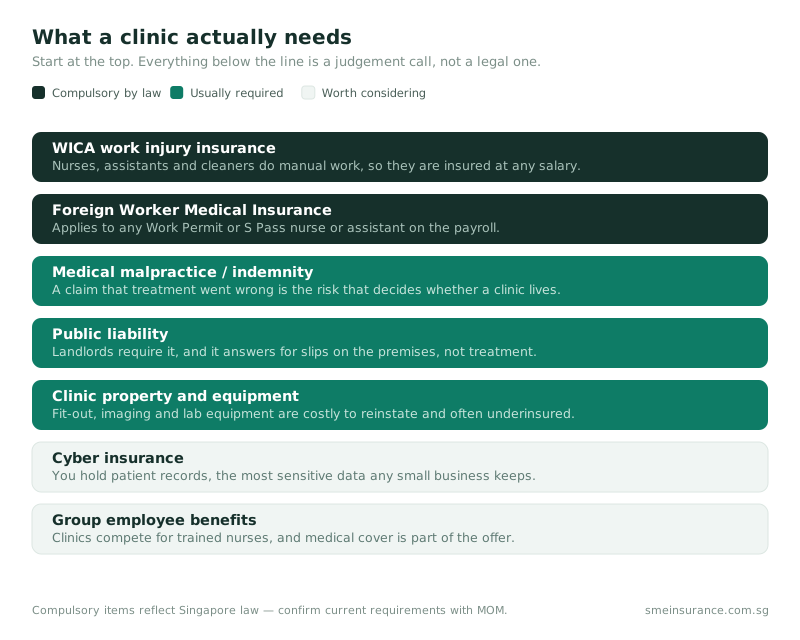
At a glance: what you need, and why
| Cover | Status | Why it matters here |
|---|---|---|
| WICA work injury insurance | Compulsory | Nurses, assistants and cleaners do manual work, so they are insured at any salary. |
| Foreign Worker Medical Insurance | Compulsory | Applies to any Work Permit or S Pass nurse or assistant on the payroll. |
| Medical malpractice / indemnity | Usually required | A claim that treatment went wrong is the risk that decides whether a clinic lives. |
| Public liability | Usually required | Landlords require it, and it answers for slips on the premises, not treatment. |
| Clinic property and equipment | Usually required | Fit-out, imaging and lab equipment are costly to reinstate and often underinsured. |
| Cyber insurance | Worth considering | You hold patient records, the most sensitive data any small business keeps. |
| Group employee benefits | Worth considering | Clinics compete for trained nurses, and medical cover is part of the offer. |
The core cover: medical malpractice / professional indemnity
Medical malpractice insurance (a specialised form of professional indemnity) covers claims that a patient suffered harm from negligent treatment, misdiagnosis, delayed referral or wrong advice — including the legal defence costs that accumulate whether or not a claim succeeds. For a practising clinician, this is the cover that protects both the business and the professional's personal position.
In practice, doctors and dentists in Singapore are expected to have adequate indemnity arrangements in place — through professional bodies, mutual medical defence organisations, or commercial insurers — and licensing and professional standards frameworks reinforce that expectation. The right arrangement depends on your specialty, procedures performed, and whether you employ or engage other practitioners; higher-intervention specialties carry materially higher indemnity costs than low-intervention ones.
Two structural points worth understanding before you buy: most malpractice policies are written on a claims-made basis (the policy in force when the claim is made responds, not the one in force at treatment), which makes continuous cover and run-off cover on retirement or closure genuinely important; and if your clinic employs locums or allied health professionals, check whose policy covers their work. See our guide to professional indemnity.
Insuring the clinic itself
- Property and equipment cover. Clinics concentrate high-value equipment into small premises — treatment chairs, diagnostic and imaging equipment, sterilisers, lab instruments — plus renovation and fit-out. A commercial property or clinic package policy covers these against fire and related perils; specialised equipment may warrant equipment breakdown cover as well, since a failed autoclave or imaging unit stops revenue immediately. See commercial property insurance.
- Public liability covers non-treatment injuries on your premises — a patient slips in the waiting room, a delivery person trips over a cable. It's distinct from malpractice cover, which handles treatment-related claims, and landlords typically require it in the lease. Medical malpractice and public liability policies should be read together to check nothing falls between them.
- Business interruption if damage closes the clinic — rent and staff costs continue while patients go elsewhere.
Your staff: WICA and benefits
Clinic assistants, nurses and cleaners do manual work as WICA defines it, so you must carry work injury compensation insurance for them regardless of salary — and for any non-manual employee earning S$2,600 a month or less. Needlestick injuries, lifting patients and handling equipment are real workplace injury risks in a clinic. Non-compliance is an offence carrying a fine of up to S$10,000, up to 12 months' jail, or both. Details in our WICA guide.
Any Work Permit or S Pass holders on the team separately need Foreign Worker Medical Insurance with at least a S$60,000 annual claim limit. And because clinics compete for trained nurses and assistants, many add group medical and personal accident benefits — indicatively from around S$300–800 per employee per year — as a retention tool.
What clinic insurance roughly costs
Indicative only — clinic premiums vary more than most industries because malpractice rating is specialty-driven:
- Malpractice / PI: the widest range on this page. A low-intervention GP practice pays far less than a practice performing procedures; indemnity for higher-risk specialties can run to five figures annually. Quote on your actual scope of practice.
- Clinic property/contents package: from around S$200–500 a year for modest premises, more with imaging or lab equipment.
- Public liability: from around S$100–400 a year per S$1 million of cover.
- WICA: roughly S$100–300 per clinical support employee per year.
Actual premiums depend on your specialty, procedures, patient volume and claims history — speak to a licensed professional for real numbers.
Frequently asked questions
Is medical malpractice insurance compulsory in Singapore?
Doctors and dentists in Singapore are expected to maintain adequate professional indemnity arrangements, and licensing conditions and professional standards frameworks reinforce this — so in practice, running a clinic without indemnity cover is not a realistic option. The exact requirements vary by profession and practice type; confirm what applies to you with MOH, your licensing framework and your professional body.
What's the difference between malpractice insurance and public liability for a clinic?
Malpractice (professional indemnity) covers claims arising from treatment and professional advice — misdiagnosis, procedural error, wrong prescription. Public liability covers non-treatment injuries and property damage on your premises — a fall in the waiting room. A clinic needs both, and the policies should be checked together so no claim type falls into the gap between them.
Do clinic assistants and nurses need WICA insurance?
Yes — clinical support work counts as manual work under WICA, so you must insure assistants, nurses and cleaners regardless of their salary, plus any non-manual staff earning S$2,600 a month or less. Failure to do so is an offence with a fine of up to S$10,000, up to 12 months' jail, or both.
What happens to my malpractice cover if I close or sell the clinic?
Because malpractice policies are typically claims-made, a claim filed after you close is only covered if run-off cover is in place — the policy active at the time of treatment won't respond to a claim made years later once it has lapsed. Arranging run-off (tail) cover on retirement, closure or sale is a standard and important step; discuss the duration with a licensed professional.
Does insurance cover my locum doctors?
Not automatically — it depends on how your policy and theirs are arranged. Some clinic policies can extend to locums and employed practitioners; in other arrangements each practitioner carries their own indemnity. Before a locum starts, confirm in writing whose policy covers their work, because a gap discovered after a claim is the worst possible time to find out.
Related cover & guides
Professional Indemnity Insurance
Covers negligence, errors and omissions in professional work. Required by some professional bodies and many B2B contracts.
Read more →Public Liability Insurance
Covers third-party injury and property damage. Not legally compulsory, but contractually required almost everywhere.
Read more →Work Injury Compensation (WICA) Insurance
Compulsory cover for workplace injuries. Required for all manual workers and non-manual staff earning ≤S$2,600/month.
Read more →What Is Professional Indemnity Insurance?
PI covers financial loss caused by your professional advice or services. Claims-made basis, retroactive dates and run-off explained.
Read more →