Cleaning is a simple business with an unusually clear insurance picture. Every cleaner is a manual worker, so work injury cover is legally compulsory for the entire operational workforce with no salary exceptions. And because the work happens inside clients' offices, malls, condos and factories, your liability exposure is concentrated in other people's property — a scratched marble lobby, a flooded server room, a slip on a floor your team just mopped. Facility managers know this, which is why their contracts specify insurance before your crew gets a door pass.
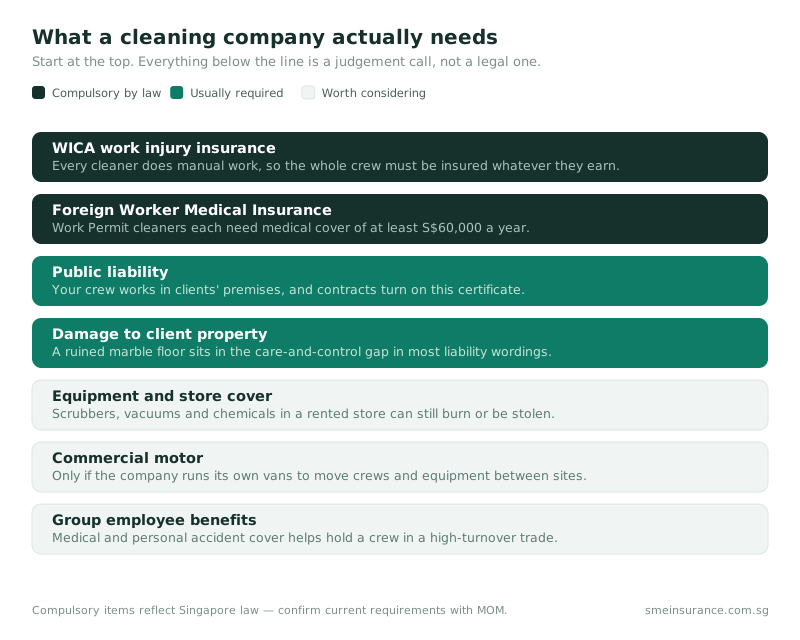
At a glance: what you need, and why
| Cover | Status | Why it matters here |
|---|---|---|
| WICA work injury insurance | Compulsory | Every cleaner does manual work, so the whole crew must be insured whatever they earn. |
| Foreign Worker Medical Insurance | Compulsory | Work Permit cleaners each need medical cover of at least S$60,000 a year. |
| Public liability | Usually required | Your crew works in clients' premises, and contracts turn on this certificate. |
| Damage to client property | Usually required | A ruined marble floor sits in the care-and-control gap in most liability wordings. |
| Equipment and store cover | Worth considering | Scrubbers, vacuums and chemicals in a rented store can still burn or be stolen. |
| Commercial motor | Worth considering | Only if the company runs its own vans to move crews and equipment between sites. |
| Group employee benefits | Worth considering | Medical and personal accident cover helps hold a crew in a high-turnover trade. |
WICA: compulsory for your entire crew
Cleaning is manual work under WICA, full stop. That means work injury compensation insurance is compulsory for every cleaner you employ — full-time, part-time, local or foreign — regardless of salary. Office and admin staff must also be insured if they earn S$2,600 a month or less. The injuries the policy exists for are the ones cleaners actually suffer: slips on wet floors, falls from ladders, chemical exposure, strains from lifting and repetitive work.
Premiums for cleaning roles are indicatively in the S$100–300 per worker per year range, rated on the actual work — external façade or height work rates higher than office cleaning. Declare the real scope: a claim from a worker doing high-level work while insured as a general office cleaner is a dispute you don't want. Clients will also ask for your WICA certificate — keep it current and ready to produce. Full details in our WICA guide.
Foreign workers: FWMI on top of WICA
Many cleaning companies rely on Work Permit holders, and every Work Permit and S Pass holder must have Foreign Worker Medical Insurance — the enhanced requirement of at least a S$60,000 annual claim limit has been fully in effect since 1 July 2025, with age-differentiated premiums and insurer/employer co-payment arrangements above certain thresholds. FWMI covers medical care generally; WICA covers work injuries. They are separate obligations and you need both for the same worker.
Employers of Work Permit holders also handle security bond obligations for certain nationalities, commonly arranged through an insurer's bond guarantee — confirm the current requirements for your workers with MOM. Our foreign worker medical insurance guide covers the details.
Public liability: your ticket into client premises
For a cleaning company, public liability insurance does double duty. It covers your legal liability for injury or property damage arising from your work — a visitor slips on a floor your team mopped without signage, a cleaner knocks over expensive equipment, harsh chemicals ruin a stone floor or carpet. And it is, in practice, a condition of doing business: facility managers, building owners, MCSTs and corporate clients specify required liability limits (S$1 million is a common floor; large facilities ask for more) in their service contracts, verified by certificate before award.
Two wording points matter more in cleaning than most trades: check the policy covers damage to property you're working on (some policies exclude property in your care, custody or control — which describes everything your crew touches), and check the treatment of loss of keys or access cards, a small but frequent claim in this business, sometimes available as an extension. See our public liability guide.
What contracts demand, and what the programme costs
When bidding for facility management, MCST, government or corporate cleaning contracts, expect the tender to require evidence of public liability at a stated limit and WICA cover for your workforce, and to keep certificates current for the contract's life. A tidy insurance file wins tenders that a cheaper, uninsured competitor can't enter. Note the cleaning industry also operates under a licensing regime with employment-related conditions — insurance sits alongside those obligations, not instead of them; confirm current licensing requirements with NEA.
Indicative annual costs for a small cleaning company:
- WICA: roughly S$100–300 per cleaner per year, rated on work type.
- Public liability: from around S$100–400 per S$1 million of cover; higher for work at height or in high-value premises.
- FWMI: per foreign worker, with age-differentiated premiums under the enhanced requirements.
- Motor: roughly S$1,000–2,500 per vehicle per year if you run vans (compulsory third-party cover at minimum).
For a labour-intensive business, WICA and FWMI will dominate the budget and scale with headcount. Actual premiums depend on your workforce and contracts — get quotes on your real crew list.
Frequently asked questions
Is WICA insurance compulsory for cleaning companies?
Yes — for the entire cleaning workforce. Cleaning is manual work under WICA, so every cleaner must be insured regardless of salary, along with any office staff earning S$2,600 a month or less. Operating without it is an offence carrying a fine of up to S$10,000, up to 12 months' jail, or both.
What insurance do clients require from a cleaning contractor?
Typically public liability insurance at a specified limit — S$1 million is a common minimum, more for large facilities — plus evidence of WICA cover for your workers, both verified by certificate before the contract is awarded. Government and MCST tenders spell out exact requirements; read the insurance clause before pricing the bid.
If my cleaner damages something in a client's office, am I covered?
That's what public liability insurance is for — but check your wording, because some policies exclude damage to property in your care, custody or control, which can describe the very premises and contents you're cleaning. Make sure your policy covers damage arising from your cleaning operations in client premises; a licensed professional can confirm the wording does what your contracts assume.
What insurance do I need for foreign cleaning workers?
Two covers per worker: WICA insurance (compulsory for all manual workers at any salary) and Foreign Worker Medical Insurance with at least a S$60,000 annual claim limit for every Work Permit and S Pass holder. Security bond obligations may also apply for Work Permit holders of certain nationalities, often arranged via an insurer's bond guarantee — confirm current requirements with MOM.
Do part-time cleaners need to be insured?
Yes. WICA applies to anyone on a contract of service regardless of hours, and cleaning is manual work — so part-time cleaners must be insured regardless of what they earn. If you engage genuinely self-employed cleaners rather than employees, WICA obligations differ, but be careful: labelling someone a contractor doesn't make them one if you control their work like an employee.
Related cover & guides
Work Injury Compensation (WICA) Insurance
Compulsory cover for workplace injuries. Required for all manual workers and non-manual staff earning ≤S$2,600/month.
Read more →Public Liability Insurance
Covers third-party injury and property damage. Not legally compulsory, but contractually required almost everywhere.
Read more →Foreign Worker Medical Insurance (FWMI): MOM Requirements
Mandatory medical cover for every Work Permit and S Pass holder — at least S$60,000 annual claim limit, separate from WICA.
Read more →Hiring Your First Employee: Insurance You Now Need
Your first hire triggers WICA if they do manual work or earn ≤S$2,600/month — and FWMI if foreign. Insure before day one.
Read more →