The beauty and wellness trade sits in an awkward insurance middle ground: not medical, but far more hands-on than retail. A facial that causes a chemical burn, a wax that scars, a massage that aggravates an injury, hair colour that triggers a severe reaction — these are treatment claims, and a standard public liability policy may exclude them unless treatment risk is specifically covered. Getting that one detail right is most of the job.
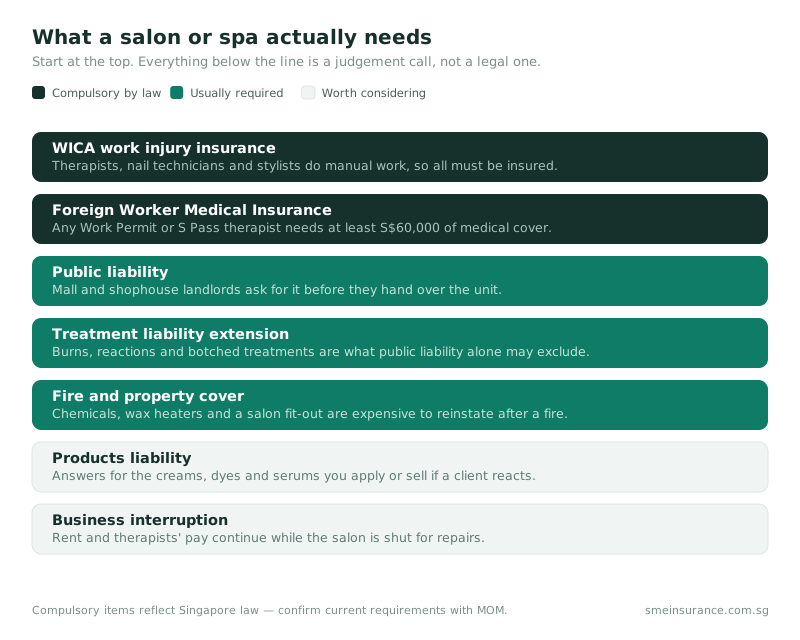
At a glance: what you need, and why
| Cover | Status | Why it matters here |
|---|---|---|
| WICA work injury insurance | Compulsory | Therapists, nail technicians and stylists do manual work, so all must be insured. |
| Foreign Worker Medical Insurance | Compulsory | Any Work Permit or S Pass therapist needs at least S$60,000 of medical cover. |
| Public liability | Usually required | Mall and shophouse landlords ask for it before they hand over the unit. |
| Treatment liability extension | Usually required | Burns, reactions and botched treatments are what public liability alone may exclude. |
| Fire and property cover | Usually required | Chemicals, wax heaters and a salon fit-out are expensive to reinstate after a fire. |
| Products liability | Worth considering | Answers for the creams, dyes and serums you apply or sell if a client reacts. |
| Business interruption | Worth considering | Rent and therapists' pay continue while the salon is shut for repairs. |
Treatment liability: the cover that defines this industry
Treatment liability (sometimes written as an extension to public liability, sometimes as a form of professional indemnity for beauty services) covers claims that a service you performed injured a customer — burns from chemical peels or hot wax, allergic reactions to products applied, scarring, infections from tools, or a massage or therapy that caused harm.
When you buy it, be precise about your treatment list. Policies are rated and worded around declared services, and higher-risk treatments — chemical peels, laser and IPL, micro-needling, advanced aesthetic procedures — may be excluded, sub-limited or declined unless declared and accepted. If you add a new service, tell your insurer before offering it, not after the first claim. And note the boundary: procedures that cross into medical territory belong in a medical practice with medical indemnity cover, not under a beauty policy.
Keep signed consent forms, patch-test records and treatment notes — insurers and courts both take a salon with documented procedures far more seriously than one without.
Public liability, product liability and your lease
- Public liability covers non-treatment injuries on your premises — a customer slips on a wet floor, trips over a hairdryer cable, or is hurt by falling shelving. Landlords and mall operators typically require it at S$1 million or more as a lease condition, often before fit-out. See our public liability guide.
- Product liability matters twice over in this trade: for products you apply during treatments and for products you sell over the counter. If a retailed serum causes a reaction at home, that's a product claim. Product liability is often packaged with public liability — check both retail sales and treatment products are within scope.
- Check your lease's insurance clause for the required limit and whether the landlord must be named as an interested party — mall requirements in particular are non-negotiable and verified before handover.
Staff, stock and premises
WICA insurance is compulsory for your therapists and stylists. Hairdressing, massage, facials and nail work are manual work under WICA, so you must insure everyone doing them regardless of salary — plus any non-manual staff earning S$2,600 a month or less. Repetitive strain, chemical exposure and burns are genuine occupational risks in this trade. Non-compliance carries a fine of up to S$10,000, up to 12 months' jail, or both. If you employ Work Permit or S Pass holders, each also needs Foreign Worker Medical Insurance with at least a S$60,000 annual claim limit — a separate obligation. Details in our WICA guide.
Round out the programme with property/contents cover for your fit-out, treatment equipment and product stock — salon and spa fit-outs are expensive, and specialised equipment (laser machines, treatment beds, sterilisation units) deserves accurate sums insured. A shop package usually bundles fire, burglary and money cover economically. See commercial property insurance.
What it roughly costs
Indicative ranges for a small salon or studio:
- Public liability with treatment extension: from around S$100–400 a year per S$1 million of cover for lower-risk service lists; advanced or device-based treatments are rated higher and quoted individually.
- WICA: roughly S$100–300 per therapist or stylist per year.
- Property/contents package: from around S$200–500 a year, more with high-value equipment.
A small nail or hair studio might cover the essentials for under S$1,000 a year; a spa running device-based aesthetic treatments will pay meaningfully more for the treatment risk alone. Actual premiums depend on your exact service list and equipment — get quotes against your real treatment menu.
Frequently asked questions
Do I need insurance to open a salon or spa in Singapore?
If you employ staff, WICA work injury insurance is compulsory — therapists and stylists count as manual workers and must be insured at any salary. No law makes liability insurance compulsory for a salon, but your landlord will almost certainly require public liability in the lease, and operating hands-on treatments without treatment liability cover is a risk no established operator takes.
Does public liability insurance cover a botched treatment?
Often not on its own — standard public liability covers premises accidents like slips and falls, and many policies exclude injuries arising from treatments unless a treatment risk extension is included. This is the single most important wording check for a beauty business: confirm your declared treatments are explicitly covered.
Am I liable if a product I sold causes an allergic reaction?
You can be — a customer harmed by a product you sold or applied may claim against you, even though you didn't manufacture it. Product liability cover, usually packaged with public liability, responds to such claims. Patch-testing before reactive treatments and keeping records substantially strengthens your position.
Are freelance therapists covered under my salon's insurance?
Not automatically. WICA obligations apply to employees on a contract of service, not independent freelancers — and your liability policy may or may not extend to work done by non-employees in your premises. If you host freelancers or rent chairs, clarify in writing who insures their work, and check your policy's position, because a claim will test exactly that boundary.
What insurance do I need for laser or IPL treatments?
Device-based treatments must be specifically declared and accepted by your insurer — many standard beauty policies exclude or sub-limit laser, IPL and similar procedures. Expect higher premiums, questions about operator training and equipment, and possible exclusions. If a treatment edges into medical territory, it needs a medical setting and medical indemnity, not a beauty policy; confirm the regulatory position for that treatment with the relevant authority.
Related cover & guides
Public Liability Insurance
Covers third-party injury and property damage. Not legally compulsory, but contractually required almost everywhere.
Read more →Work Injury Compensation (WICA) Insurance
Compulsory cover for workplace injuries. Required for all manual workers and non-manual staff earning ≤S$2,600/month.
Read more →Commercial Property & Fire Insurance
Protects premises, renovation, stock and equipment against fire and other damage. Often required under your tenancy agreement.
Read more →Public Liability vs Professional Indemnity: The Difference
PL covers injury and property damage you cause; PI covers financial loss from your advice. Scenario table shows which pays when.
Read more →