
Contractors' All Risks (CAR) insurance is the standard policy for construction and renovation work. It combines two covers in one: damage to the works themselves — the partially built structure, materials on site, sometimes plant and equipment — and liability for injury or property damage the works cause to third parties. For contractors, it's a working licence in practice; for business owners commissioning a renovation, it's the document your landlord will ask to see before hoarding goes up.
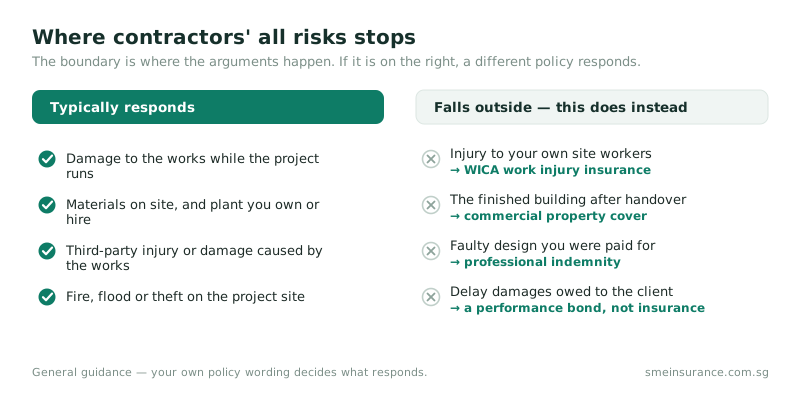
What a CAR policy covers
A CAR policy is written in two sections:
- Section 1 — the works. Accidental physical loss or damage to the contract works during the construction period: the structure or fit-out being built, materials on site awaiting installation, and (where added) construction plant, tools and temporary works. Fire, water damage, collapse, theft of materials and accidental damage during installation are the classic claims.
- Section 2 — third-party liability. Injury to third parties and damage to their property arising from the works — a neighbouring unit damaged by hacking or water ingress, a passer-by injured near the site, damage to the building the works sit inside. In renovation contexts, this section is usually why the landlord and MCST insist on the policy, and they'll often require to be named as insured parties on it.
Common exclusions to know: defective design and workmanship (the cost of redoing bad work itself, though resulting damage is often covered), wear and tear, contractual penalties for late completion, and injuries to your own workers — worker injuries belong under compulsory work injury compensation (WICA) insurance, which site owners and main contractors will typically also require you to show alongside CAR.
Renovations: what landlords, malls and MCSTs expect
For fit-out and renovation works — an office reinstatement, a café build-out, a retail unit in a mall — the pattern is consistent:
- Landlords and mall operators require the renovating tenant or their contractor to hold CAR cover for the works period, with third-party limits commonly in the S$1 million range or higher, and with the landlord (and often the mall's managing agent) named on the policy.
- MCSTs in strata-titled buildings — offices, shophouses, industrial complexes — typically require evidence of insurance before granting a renovation permit, because works in one unit so easily damage common property and neighbouring units.
- Main contractors engaging subcontractors usually require subs to carry their own cover or evidence they're covered under the project policy — don't assume you're included; ask for it in writing.
If you're a business owner commissioning works, make the contractor's insurance part of your appointment checklist: ask for the policy schedule, check the works value and liability limit against your landlord's requirements, and confirm the required parties are named. Our guide to renovation contractor insurance requirements walks through the paperwork in order.
Who insures what on a project is market practice rather than law, and the contract governs. Read the insurance clause in the main contract, subcontract or appointment before assuming anyone else’s policy covers you.
| Party | Typically buys | Typically required to show |
|---|---|---|
| Building owner, developer or tenant commissioning works | Property cover for the existing structure; sometimes the project CAR policy itself | Evidence the works are insured, and that its interest is noted where the lease or contract says so |
| Main contractor | CAR on the works plus third-party liability, and WICA cover for its own workers | A policy schedule with limits, works value and period matching the contract, naming the parties required |
| Subcontractor | Its own liability and WICA cover, unless it is included under the main contractor’s project policy | Written confirmation that it is either separately insured or named under the project policy — not an assumption |
| Consultant or designer | Professional indemnity for design, specification and advice | A PI certificate at the limit stated in the appointment, in force for the period the appointment requires |
Per-project vs annual cover
Contractors can buy CAR two ways, and the right answer is mostly a function of volume:
- Per-project policies insure one contract for its duration (plus a maintenance period). They fit occasional or unusually large projects, and projects where the owner dictates specific insurance terms. The drawbacks are administrative — every job needs its own placement — and the familiar failure mode of works starting before cover is bound.
- Annual (open) CAR policies cover all of a contractor's projects within agreed parameters — maximum contract value, types of work, territory — for a year. For renovation contractors running many small and mid-sized jobs, annual cover is usually cheaper per project, and removes the risk of the job that slipped through. Larger or out-of-scope contracts are then topped up individually.
Premiums are quoted on the works value, type of construction, duration and site conditions — wet works, structural alterations and work in occupied buildings rate higher than cosmetic fit-out. There's no standard market price worth quoting; actual premiums depend on your projects, so get quotes on your real pipeline.
Buying it right: three things to check
- Cover the full works period — and the maintenance period. The policy should run from site possession to handover, plus the defects liability period your contract specifies. Extensions of time happen; make sure the policy is extended with them, or claims after the original end date fail.
- Name the parties your contracts require. Landlords, MCSTs, main contractors and project owners often must be named as insured or noted on the policy. Get the wording they require before binding cover, not after.
- Match Section 2 limits to the surroundings, not the job size. A S$80,000 fit-out above a fully stocked luxury retailer can cause damage worth many times the contract value. Price the neighbours, not just the works.
Frequently asked questions
Is Contractors' All Risks insurance compulsory in Singapore?
Not generally by statute for ordinary works — but it is required contractually before most projects can start: landlords and mall operators demand it for fit-out works, MCSTs require it before approving renovations in strata buildings, and main contractors and project owners require it under construction contracts. In practice, no CAR policy usually means no site access, so treat it as a working requirement even though it isn't a legal one. Confirm each approving party's specific requirements.
What does CAR insurance cover?
CAR insurance covers accidental loss or damage to the construction or renovation works themselves — the structure being built, materials on site and, where added, plant and tools — plus liability for injury or property damage the works cause to third parties, such as neighbouring units or passers-by. It does not cover the cost of redoing defective work itself, contract penalties, or injuries to your own workers, which fall under compulsory WICA insurance.
Who buys the CAR policy — the contractor or the business owner?
Usually the contractor buys it, but the contract decides — and the party commissioning the works should verify cover exists either way. If you're a tenant renovating a unit, your landlord will hold you responsible for the works, so check your contractor's policy schedule, confirm the works value and liability limit meet the landlord's requirements, and make sure required parties (landlord, MCST, managing agent) are named before work starts.
Should a renovation contractor buy per-project or annual CAR cover?
Contractors running multiple jobs a year are usually better served by an annual CAR policy, which automatically covers all projects within agreed limits on contract value and work type — it's typically cheaper per project and eliminates the risk of a job starting uninsured. Per-project policies suit occasional works, one-off large contracts, or projects where the owner dictates specific insurance terms.
Does CAR insurance cover my workers if they're injured on site?
No — CAR excludes injuries to your own employees, which are covered under work injury compensation (WICA) insurance, compulsory in Singapore for all manual-work employees regardless of salary. Site owners and main contractors will normally ask to see both policies before granting access: CAR for the works and third parties, WICA cover for the workforce. Budget for the pair, not just one.
Related cover & guides
Insurance Requirements for Renovation Works in Singapore
What MCSTs and landlords demand before works start — CAR, public liability, workmen's compensation — and who buys: owner or contractor.
Read more →Insurance for Construction Companies
WICA for high-risk workers, contractors' all risks, public liability, FWMI and bonds — the full construction insurance stack.
Read more →Work Injury Compensation (WICA) Insurance
Compulsory cover for workplace injuries. Required for all manual workers and non-manual staff earning ≤S$2,600/month.
Read more →Public Liability Insurance
Covers third-party injury and property damage. Not legally compulsory, but contractually required almost everywhere.
Read more →